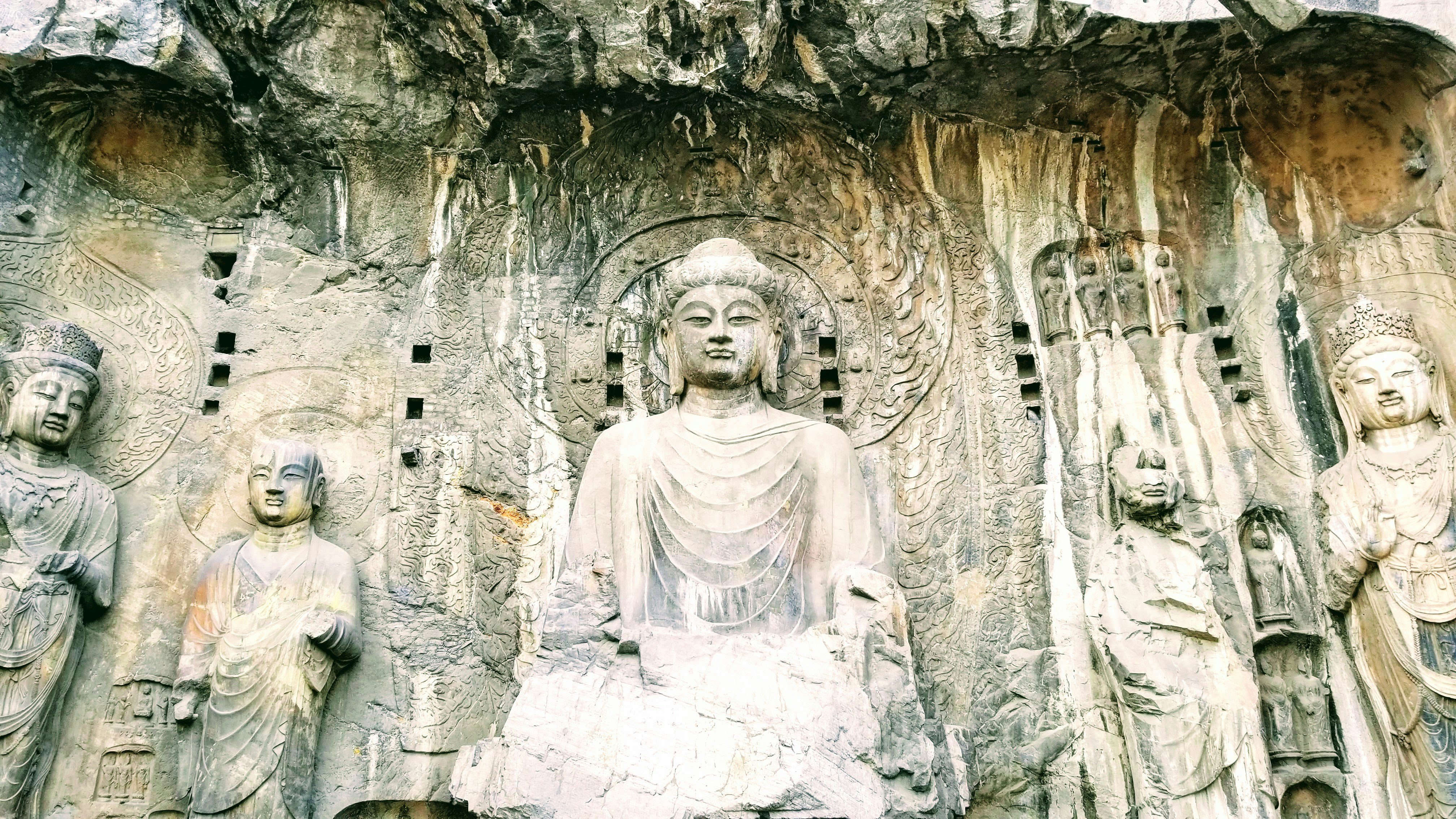
Polonnaruwa was Sri Lanka's second great capital, and for many travellers it is the most rewarding of the Cultural Triangle's ancient cities. More compact and better preserved than sprawling Anuradhapura, its ruins are set among shaded parkland and are best explored by bicycle, making it a manageable and deeply atmospheric day out. At its heart stands the Gal Vihara, a group of Buddha statues carved directly into a granite cliff and one of the finest achievements of ancient Sinhalese art.
Why Visit Polonnaruwa
Polonnaruwa served as Sri Lanka's capital from the 11th to the 13th century AD, and its golden age came under King Parakramabahu I in the 12th century. As a UNESCO World Heritage Site, it offers a concentrated dose of ancient Sri Lankan history: royal palaces, audience halls, Buddhist temples, and the monumental Gal Vihara, all within a compact area that can be comfortably explored in a day. The site is also notably family-friendly and accessible, with flat terrain, shaded paths, and the option to cycle between monuments. For photographers and history enthusiasts alike, Polonnaruwa is a highlight of any Cultural Triangle itinerary.
The Royal Palace of King Parakramabahu
The Royal Palace was once a grand multi-storey structure, of which the substantial brick walls and foundations now remain. Walking through the ruins gives a sense of the scale and sophistication of Parakramabahu's court, with adjacent audience halls and bathing pools completing the picture of a planned royal complex. The thick walls, designed to keep the interior cool, are a reminder of the engineering thought that went into these buildings.
Gal Vihara
The Gal Vihara is the undisputed highlight of Polonnaruwa, a group of four Buddha statues carved from a single granite rock face in the 12th century. The figures, a seated Buddha in meditation, another seated figure inside a cave, a standing Buddha, and a large reclining Buddha, are remarkable for their scale, serenity, and the quality of the carving, which has survived almost a millennium with remarkable detail. The site remains a place of reverence, and modest dress is expected. For most visitors, Gal Vihara alone is worth the journey to Polonnaruwa.
The Vatadage and the Quadrangle
The Polonnaruwa Vatadage is a circular relic house, one of the finest examples of ancient Sri Lankan architecture, with elaborately carved entrance stones, moonstones, and guardstones surrounding a central stupa. It sits within the Quadrangle, a compact cluster of some of the city's most important monuments, including the Thuparama image house, the Hatadage, and the Atadage. Because the Quadrangle concentrates so many significant ruins in one small area, it is an efficient and rewarding part of the site to explore on foot.
Parakrama Samudra
The Parakrama Samudra, or Sea of Parakrama, is a vast reservoir built by King Parakramabahu I and still in use today for irrigation. The scale of the lake is hard to overstate, and a drive or walk along its bund, or embankment, at sunset is one of the most peaceful experiences in the Cultural Triangle. Wild elephants are sometimes spotted along the shoreline in the early morning or evening, and the reservoir attracts a wide variety of birdlife.
Lankatilaka and Rankot Vihara
Beyond the Quadrangle, the Lankatilaka image house is a towering brick structure containing a large, though headless, standing Buddha, with walls that still rise impressively high. Nearby, the Rankot Vihara is the largest stupa in Polonnaruwa, another demonstration of the engineering ambition of the medieval kingdom. These sites are spread along the route through the ancient city and are easily reached by bicycle.
Archaeological Museum
The on-site Archaeological Museum is a good starting point, offering context on the layout, history, and daily life of medieval Polonnaruwa through models, artefacts, and displays. A short visit before exploring the ruins helps make sense of what you will see, particularly for families wanting to give children a framework for the day.
Cycling the Ancient City
Cycling is the most popular and enjoyable way to explore Polonnaruwa. Bicycles can be rented through most hotels and guesthouses in the nearby New Town, and the flat, shaded tracks between monuments make for easy riding. A typical route takes in the Royal Palace, the Quadrangle, the northern monuments including Gal Vihara, and a loop past Parakrama Samudra, all at a relaxed pace over a half to full day. Tuk-tuks and private cars are good alternatives for those who prefer not to cycle.
Nearby Elephant Safaris
Polonnaruwa sits close to Minneriya and Kaudulla National Parks, both famous for large gatherings of wild elephants, particularly between July and September during The Gathering. A late-afternoon safari pairs naturally with a morning exploring the ruins, giving a full day that balances ancient history with wildlife. The parks are a short drive away, making Polonnaruwa an excellent base for combining the two.
Best Time to Visit
Like Anuradhapura, Polonnaruwa is in Sri Lanka's dry zone, with the most comfortable months generally from May to September. The heat can be intense by midday, so start cycling early, take a long midday break, and resume in the late afternoon. For elephant safaris, plan around July to September for The Gathering.
How to Get There
Polonnaruwa is roughly four to four and a half hours from Colombo by road and is commonly combined with Sigiriya, Dambulla, and Anuradhapura on a Cultural Triangle itinerary. A private driver offers the most flexibility. Many travellers base themselves in Sigiriya or Habarana and visit Polonnaruwa as a day trip, though staying overnight in Polonnaruwa's New Town allows a more relaxed early start.
How Long to Stay
One night is typical, or the site can be visited as a day trip from Sigiriya or Habarana. A full day on the ruins, with a midday break, is the ideal way to experience Polonnaruwa at a comfortable pace. If combining with an elephant safari, allow a full day plus the following morning.
Where to Stay
Accommodation is concentrated in Polonnaruwa's New Town, the modern commercial centre near the ancient city, with options ranging from guesthouses to mid-range hotels. Staying in New Town offers easy access to restaurants, bicycle rentals, and local amenities. Properties closer to Parakrama Samudra offer more scenic, quieter settings. When booking, confirm bicycle rental and early breakfast options if you plan a sunrise start.
Food and Dining
Polonnaruwa's New Town has a local Muslim community and offers halal-friendly food options, including rice and curry, biryani, and short eats. Roadside stalls near the archaeological site sell fresh fruit, drinks, and light snacks, convenient for refuelling during a day of cycling. As with other regional towns, confirm halal status directly with restaurant staff, and pack water and snacks for your time in the ruins, where food options are limited.
Cultural and Historical Context
Polonnaruwa became Sri Lanka's capital after the decline of Anuradhapura and the south Indian Chola invasions of the late 10th and early 11th centuries. Its golden age came under King Parakramabahu I, who ruled from 1153 to 1186 AD, unified the island, expanded the irrigation system, and oversaw a flowering of art and architecture. The Gal Vihara and many of the city's finest monuments date from his reign. Parakramabahu's famous dictum that not a single drop of water should flow to the sea without being put to use encapsulates the medieval kingdom's mastery of irrigation, embodied in the vast Parakrama Samudra. After Parakramabahu, the kingdom gradually weakened under internal strife and further invasions, and the capital was eventually abandoned to the jungle in the 13th century, to be rediscovered centuries later.
Polonnaruwa Travel Tips
- Cycling: Start early, take a long midday break for rest and lunch, and resume in the late afternoon. Bring a scarf for sun protection and modest coverage at religious sites.
- Dress Code: Shoulders and knees should be covered, and shoes removed at specific sacred points such as Gal Vihara.
- Tickets: A single ticket covers the main archaeological sites and the museum. Buy it at the entrance or arrange it through your hotel.
- Combining Sites: Pair a morning at the ruins with a late-afternoon elephant safari at Minneriya or Kaudulla for a full, varied day.