Anuradhapura is where Sri Lankan civilisation began. Founded in the 4th century BC and serving as the island's capital for over a thousand years, it is a vast UNESCO World Heritage Site of enormous stupas, ancient monasteries, and sacred trees spread across a green, peaceful landscape. For travellers interested in history, archaeology, and the deep roots of South Asian Buddhism, it is one of the most rewarding destinations in the country.
Why Visit Anuradhapura
Anuradhapura was Sri Lanka's first great capital and remained the centre of Sinhalese power and Buddhist learning for well over a millennium. Its ruins span an enormous area, and several of its ancient stupas rank among the largest brick structures ever built, comparable in scale to the pyramids of Egypt. The city is also a living pilgrimage site: the sacred Sri Maha Bodhi tree and the great stupas remain active places of worship, drawing devotees from across Sri Lanka and the Buddhist world. For visitors of any faith, the combination of monumental scale, historical depth, and spiritual atmosphere makes Anuradhapura an essential Cultural Triangle stop.
Ruwanwelisaya Stupa
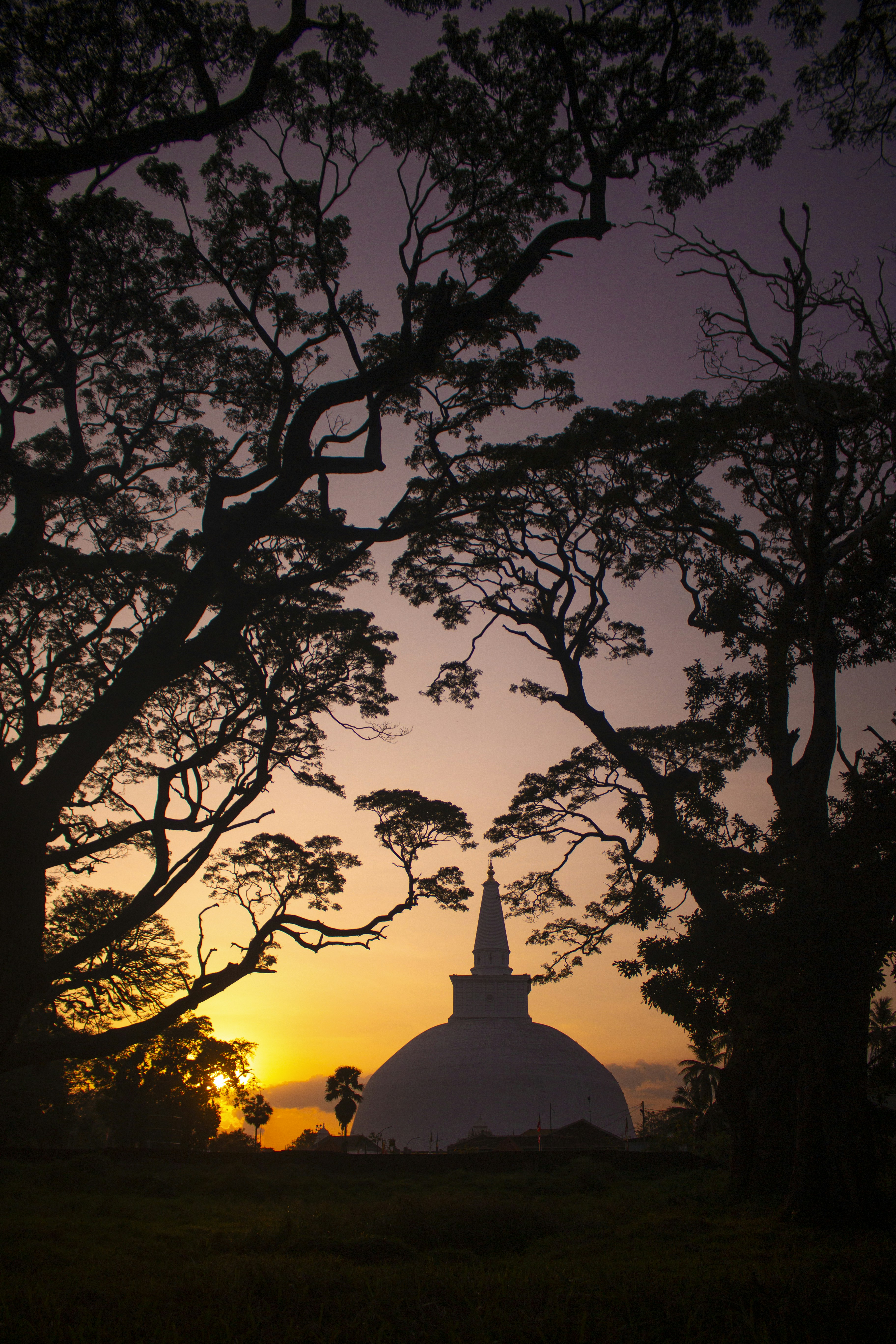
The Ruwanwelisaya is one of the most revered and visually striking monuments in Anuradhapura, a massive white dome built in the 2nd century BC by King Dutugemunu. It remains an active site of worship, and the sight of pilgrims in white circling the stupa at dawn is one of the enduring images of Anuradhapura. Modest dress is required, and shoes must be removed before stepping onto the sacred sand platform surrounding the stupa.
Sri Maha Bodhi
Said to have been grown from a cutting of the Bodhi tree under which the Buddha attained enlightenment, the Sri Maha Bodhi is one of the oldest living trees in the world with a documented planting date, having been brought to Sri Lanka in the 3rd century BC. It is the most sacred site in Anuradhapura and a deeply important pilgrimage destination. The tree is housed within a protective enclosure, and the surrounding grounds are filled with devotees, especially on poya, or full moon, days.
Jetavanaramaya
The Jetavanaramaya was once one of the tallest structures in the ancient world, a colossal brick stupa originally standing over 120 metres high. Built in the 3rd century AD by King Mahasena, it is a powerful reminder of the scale and engineering ambition of Anuradhapura at its peak. Even in its partially restored state, the sheer mass of the structure is staggering, and it is a highlight for anyone interested in ancient architecture.
Abhayagiri Monastery Complex
The Abhayagiri was one of the largest monastic institutions in the ancient world, home to thousands of monks and a major centre of Buddhist learning. The sprawling ruins include the Abhayagiri Dagaba, ancient bathing ponds, moonstones, and meditation platforms. It is generally quieter than the central stupas and offers a more contemplative, exploratory experience, with shaded paths winding through the remains of a once-vast monastic city.
Isurumuniya Rock Temple
Set beside a small lake, the Isurumuniya Rock Temple is known for its rock carvings, most famously the Isurumuniya Lovers, a bas-relief of a seated couple that has become one of Sri Lanka's most recognised ancient artworks. The temple is a more compact, manageable site and a good stop for families or travellers wanting a shorter visit, with a small shrine carved into the rock and a pleasant setting.
Twin Ponds (Kuttam Pokuna)
The Twin Ponds are a fine example of ancient Sri Lankan hydraulic engineering, a pair of beautifully proportioned bathing pools built for the monastic community. The precision of the stonework and the sophisticated water filtration system are remarkable for their age, and the site is worth a stop for anyone interested in ancient urban planning and engineering.
Mihintale
About 13 kilometres from Anuradhapura, Mihintale is a separate hill site regarded as the cradle of Buddhism in Sri Lanka. It was here, in the 3rd century BC, that the monk Mahinda, son of the Indian Emperor Ashoka, met the Sri Lankan king Devanampiyatissa and introduced Buddhism to the island. The site involves a climb of many steps and offers stupas, caves, and sweeping views, making it a rewarding half-day addition for travellers with an interest in religious history.
Exploring by Bicycle
Because Anuradhapura's sites are spread across a large area, a bicycle is one of the most enjoyable and practical ways to explore. Bicycles can be rented through most hotels and guesthouses, and the shaded tracks between sites make for pleasant riding in the cooler morning and late afternoon hours. Tuk-tuks and private cars are good alternatives for travellers who prefer not to cycle or are visiting with elderly family members.
Best Time to Visit
Anuradhapura sits in Sri Lanka's dry zone, with the most comfortable months generally from May to September. The heat can be intense by late morning, so plan sightseeing in two blocks, early morning and late afternoon, with a long midday break. Early starts are strongly recommended both for comfort and for the atmosphere of the stupas at dawn, when pilgrims gather and the light is at its best.
How to Get There
Anuradhapura is roughly four to four and a half hours from Colombo by road and is commonly combined with Polonnaruwa, Sigiriya, and Dambulla on a Cultural Triangle itinerary. A private driver offers the most flexibility for prayer and meal breaks. There is also a train service to Anuradhapura, though most travellers on a Cultural Triangle loop prefer the convenience of a car.
How Long to Stay
A full day is recommended to do justice to the main sites, with an additional half day if you plan to visit Mihintale. One to two nights is typical, allowing an early start on the ruins and a relaxed pace. If time is very limited, a focused half-day covering Ruwanwelisaya, Sri Maha Bodhi, and Jetavanaramaya captures the essence of the Sacred City.
Where to Stay
Anuradhapura has a range of hotels and guesthouses catering to Buddhist pilgrims, international tourists, and business travellers, given its role as a regional centre. Larger hotels in the town centre are more likely to offer a range of dietary options and are within reasonable distance of amenities. When booking, confirm air-conditioning and early breakfast options if you plan pre-dawn starts to beat the heat.
Food and Dining
As a long-established regional city, Anuradhapura has a resident Muslim community and offers reasonably accessible halal food, particularly in and around the town centre. Local restaurants serve Sri Lankan rice and curry, biryani, and short eats. Vegetarian dishes are widely available given the large number of Buddhist pilgrims, making them a safe default. Confirm halal arrangements with your hotel in advance, especially for early breakfasts before a sunrise start.
Cultural and Historical Context
Anuradhapura was the capital of Sri Lanka from around the 4th century BC until the 11th century AD, a span of over a thousand years. It was during this period that Buddhism took root in Sri Lanka, introduced at nearby Mihintale in the 3rd century BC, and the city became one of the great centres of Buddhist learning and monasticism in the ancient world. The enormous stupas were both religious monuments and statements of royal power, funded by kings to earn merit and demonstrate devotion. The city's sophisticated irrigation system, with reservoirs and canals that supported a large population in the dry zone, was another hallmark of its civilisation. After the capital moved south to Polonnaruwa, Anuradhapura was gradually reclaimed by the jungle, only to be rediscovered and restored in the modern era as both an archaeological site and a living pilgrimage centre.
Anuradhapura Travel Tips
- Dress Code: Shoulders and knees must be covered at all sacred sites, and shoes removed before stepping onto stupa platforms. Lightweight, easy-to-remove footwear is ideal.
- Heat Management: Carry sunscreen, a hat, and a refillable water bottle. Plan a long midday break to avoid the most intense heat.
- Getting Around: Distances between sites are larger than they appear. Hire a bicycle, tuk-tuk, or private car rather than walking.
- Poya Days: Full moon days are especially busy with pilgrims. Plan ahead if visiting during these times, as sites can be crowded but also at their most atmospheric.